This is a past event. Registration is closed. View other Royal Asiatic Society China in Shanghai events.

RAS Art Focus
in collaboration with the Consulate General of India in Shanghai
Did Buddhism Indianize China?
Hu Shih and the Long History of Buddhism in China
Friday, 16 October 2026
6:45 pm Registration
7:00 pm to 9:00 pm
We are pleased to announce our autumn Art Focus series, in collaboration with the Consulate General of India in Shanghai and convened by art historian Julie Chun. The series explores the transmission of Buddhism, and with it, Buddhist imagery from India to China. This vast and fascinating subject provides our guest speakers with an opportunity to share their areas of expertise and distinctive perspectives, providing insight to the general public of how religious ideas and visual traditions traveled across geographies, and were circulated, transformed, and interpreted along the way.
We are especially pleased to welcome Dr. Tansen Sen, Professor of History and Director of the Center for Global Asia at NYU, Shanghai and Associated Full Professor, Department of History, NYU, who will deliver the inaugural lecture in this four-part series.
Lecture topic:
Hu Shih (1891–1961), a leading Chinese intellectual and later chancellor of Peking University, wrote several essays on India–China interactions during the first half of the twentieth century. In one of them, "The Indianization of China," he outlined the influence of Buddhism on Chinese society. The 1937 essay ended on a confident note: China could "achieve a rapid liberation from the 2,000 years cultural domination by India." Focusing on this and other essays, this presentation examines the two thousand years of Buddhist interaction between India and China to which Hu Shih refers, and reevaluates several of its facets: the reasons for the successful transmission of Buddhism to China, the localization of Buddhism in China, and the reverse diffusion of Buddhism from China to India. It argues that these interactions are best understood not within a civilizational or nation-state framework, in which one society "dominates" another, but as a multidirectional, multicultural, and multilayered process that generated multiple Buddhisms and a wide range of transregional connections and influences — a process that Hu Shih's own evidence cannot contain.
About the speaker:
Tansen Sen is Professor of history; the Director of the Center for Global Asia at NYU Shanghai; and Associated Full Professor, Department of History, NYU. He is currently the Nalanda Visiting Professor in India–China Studies at the Asia Research Institute, National University of Singapore. He is the author of Buddhism, Diplomacy, and Trade: The Realignment of Sino-Indian Relations, 600-1400 (2003; 2016) and India, China, and the World: A Connected History(2017; 2018). He has edited Buddhism Across Asia (2014), and co-edited (with Burkhard Schnepel) Travelling Pasts: The Politics of Cultural Heritage in the Indian Ocean World (2019) and (with Brian Tsui) Beyond Pan-Asianism: Connecting China and India, 1840s–1960s (2021). With Adhira Mangalagiri he has co-edited a special issue of the International Journal of Asian Studies (July 2022) on "methods in China-India studies." He is currently working on a book about Zheng He's maritime expeditions in the early fifteenth century, a monograph on Jawaharlal Nehru and China, and co-editing (with Engseng Ho) the Cambridge History of the Indian Ocean, volume 1.
He has done extensive research in India, China, Japan, and Singapore with grants from the American Institute of Indian Studies, the Japan Foundation, the American Philosophical Society, the Chiang Ching-kuo Foundation, National Endowment for the Humanities, the Institute of Southeast Asian Studies (Singapore), and Institute for Advanced Study (Princeton). He was the founding head of the Nalanda-Sriwijaya Center in Singapore and served on the Governing Board of the Nalanda University.
Speakers
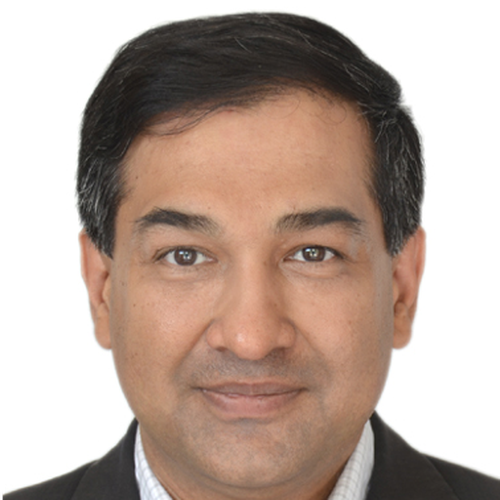
Tansen Sen
WebsiteTansen Sen is Professor of history; the Director of the Center for Global Asia at NYU Shanghai; and Associated Full Professor, Department of History, NYU. He is currently the Nalanda Visiting Professor in India–China Studies at the Asia Research Institute, National University of Singapore. He is the author of Buddhism, Diplomacy, and Trade: The Realignment of Sino-Indian Relations, 600-1400 (2003; 2016) and India, China, and the World: A Connected History (2017; 2018). He has edited Buddhism Across Asia (2014), and co-edited (with Burkhard Schnepel) Travelling Pasts: The Politics of Cultural Heritage in the Indian Ocean World (2019) and (with Brian Tsui) Beyond Pan-Asianism: Connecting China and India, 1840s–1960s (2021). With Adhira Mangalagiri he has co-edited a special issue of the International Journal of Asian Studies (July 2022) on “methods in China-India studies.” He is currently working on a book about Zheng He’s maritime expeditions in the early fifteenth century, a monograph on Jawaharlal Nehru and China, and co-editing (with Engseng Ho) the Cambridge History of the Indian Ocean, volume 1.
He has done extensive research in India, China, Japan, and Singapore with grants from the American Institute of Indian Studies, the Japan Foundation, the American Philosophical Society, the Chiang Ching-kuo Foundation, National Endowment for the Humanities, the Institute of Southeast Asian Studies (Singapore), and Institute for Advanced Study (Princeton). He was the founding head of the Nalanda-Sriwijaya Center in Singapore and served on the Governing Board of the Nalanda University.
Sponsors and Partners
Organizer





Tickets
RAs China Institutional Member
RMB 80
Standard Price
Buy TicketMax 5 tickets per RAS Institutional member.
(Includes a drink)Members and Guests of the Consulate General of India in Shanghai
RMB 80
Standard Price
Buy Ticket(Includes a drink)